The Transformation of Mont Blanc: From the French Alps to Japanese Convenience Stores
I. Origins in the French Alps: Technological Innovation and Social Context
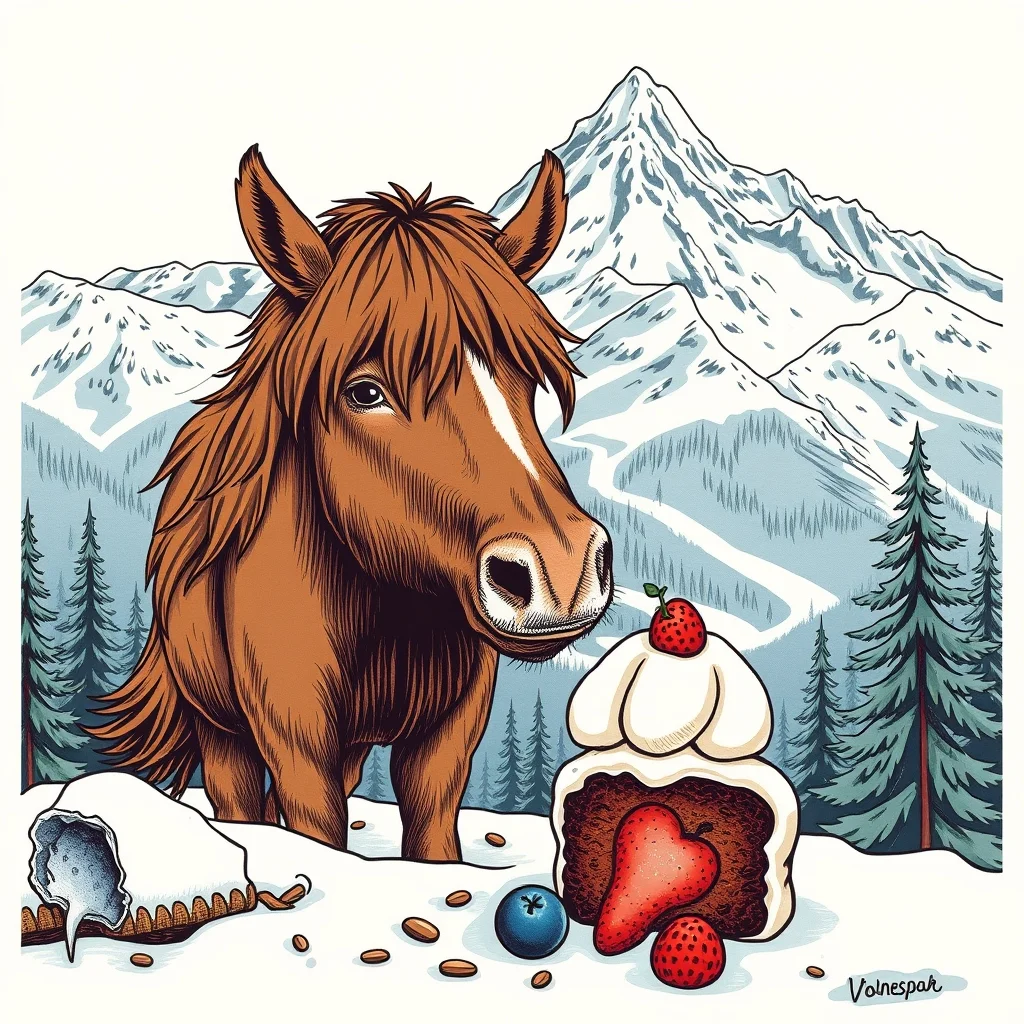
The Mont Blanc dessert is a culinary creation deeply rooted in the history and culture of France, particularly the Alpine regions. Its genesis can be traced back to the early 20th century, specifically the early 1900s. It is believed that the chefs from the Ardèche region of southern France were the first to introduce this dessert to the world. The birth of the Mont Blanc was not merely the development of a recipe; it was the result of a confluence of factors within French society at the time. The dessert, using chestnuts as its main ingredient and shaped to resemble the grandeur of the Alps, would soon grace the pages of French gastronomy. During this period, France was experiencing the Belle Époque, a time of prosperity that fueled a growing desire for new desserts. People sought to alleviate daily stresses and pursue new experiences through sweet and elaborate desserts. The Mont Blanc emerged in response to these societal demands.
1. The Revival of Chestnuts and Technological Advancements
Chestnuts, the core ingredient of the Mont Blanc, had long been a crucial food resource in France, especially in the Alpine regions. Since the Middle Ages, chestnut trees thrived even in harsh mountainous terrains, contributing to food security. However, in the late 18th century, the introduction of chestnut blight (Cryphonectria parasitica) from North America decimated French chestnut trees, leading to a sharp decline in chestnut production and the decline of chestnut-based food culture. The chestnut blight had a devastating impact on French chestnut production, and recipes using chestnuts as the main ingredient were on the verge of disappearing. As chestnuts became difficult to obtain, alternative recipes using other ingredients were developed. However, it was not easy to find ingredients that could replace the unique taste and flavor of chestnuts.
In the late 19th century, as French agricultural technology advanced, chestnut varieties resistant to the blight were developed, and chestnut production gradually recovered. Moreover, various cooking methods utilizing chestnuts were developed, with the technique of boiling and mashing chestnuts, then mixing them with sugar to form a paste, having a decisive influence on the creation of the Mont Blanc. In addition, the advancements in milling technology contributed to softening the texture of the chestnut paste and realizing the unique, thin, and elongated strands of the Mont Blanc. These technological advances played a pivotal role in creating the distinctive appearance and texture of the Mont Blanc. For instance, the chestnut paste extrusion technology developed at the time became an essential technique for creating the iconic shape of the Mont Blanc today. This technology allowed the chestnut paste to be extruded into thin, uniformly sized strands, creating a unique shape reminiscent of the snow-capped peaks of Mont Blanc. This technology greatly contributed to adding an artistic dimension to the Mont Blanc.
2. Social Changes and the Growth of Dessert Culture
From the late 19th century to the early 20th century, French society underwent rapid changes. The Industrial Revolution led to an increase in the urban population, and the active participation of women in society brought about changes in eating habits. Desserts that could be enjoyed easily by busy modern people became necessary, and as a result, patisseries and cafes began to flourish. The Mont Blanc was one of the desserts that emerged in response to these social demands. Cafes and patisseries in Paris at the time were places for social interaction and for experiencing new cultural trends. The Mont Blanc quickly spread in these spaces, naturally integrating into the daily lives of the French. The Mont Blanc was especially popular among women because its beautiful appearance and sweet taste captivated their tastes.
In 1903, there is a theory that a pastry chef named 'Henri Giraud' in Paris, France, developed a new dessert using chestnut paste. This dessert was modeled after the appearance of Mont Blanc mountain, and it began to gain popularity among the French upper class at the time. The Mont Blanc went beyond a simple dessert and became a cultural icon symbolizing the beauty of the French Alps. Henri Giraud realized the unique shape of the Mont Blanc by thinly squeezing chestnut paste and using meringue as a base. This dessert soon became the best specialty in Paris and spread throughout France. Henri Giraud widely publicized his name through the Mont Blanc and greatly influenced the French confectionery industry.
Episode: When the Mont Blanc dessert first appeared, it was nicknamed the 'chestnut silkworm' because of its unique shape. In addition, the recipe for the Mont Blanc varied slightly from region to region, and in the Alpine region, rum or brandy was often added to the chestnut paste to deepen the flavor. This rum or brandy served to further enrich the flavor of the chestnut and add a unique, luxurious taste to the Mont Blanc. Adding rum or brandy not only deepens the flavor of the Mont Blanc but also contributes to its preservation.
3. War and Food Shortages: Changes in Ingredients
World War I (1914-1918) and World War II (1939-1945) greatly impacted French society, and food shortages necessitated changes in the ingredients of the Mont Blanc. As the supply of chestnuts became difficult, Mont Blanc made with sweet potatoes or beans appeared. Furthermore, as the rationing of sugar was implemented, the sweetness of the Mont Blanc decreased in some cases. The war changed the recipe of the Mont Blanc and presented new challenges to dessert culture. During the war, the Mont Blanc was considered not just a dessert, but also part of the food for survival. Even during these difficult times, the Mont Blanc remained deeply rooted in the lives of the French. The war simplified the Mont Blanc recipe and made the use of ingredient substitutes inevitable. However, the Mont Blanc remained a source of hope and comfort for the French.
II. Scientific Analysis: The Secrets of the Mont Blanc's Taste and Texture
The appeal of the Mont Blanc stems from scientific principles beyond a simple recipe. The combination of the chemical and physical properties of each ingredient, such as chestnuts, sugar, and whipped cream, creates a unique taste and texture. In particular, the process of making chestnut paste is a crucial factor in determining the core flavor of the Mont Blanc. The taste and texture of the Mont Blanc are not only influenced by the combination of ingredients but also greatly by the chemical changes that occur during the manufacturing process.
The Science of Chestnut Paste
Chestnut paste is formed through the interaction of starch, protein, and fat components in chestnuts. During the process of boiling chestnuts, the starch gelatinizes, resulting in a soft texture. Sugar regulates the moisture content of the chestnuts through osmotic action and helps to increase preservation. Furthermore, the process of squeezing the chestnut paste thinly increases the surface area, increasing contact with air, and enriching the flavor. The time and temperature of boiling the chestnuts, and the amount of sugar, are important variables that determine the taste and texture of the chestnut paste.
Hard Water vs. Soft Water: Variables in Mont Blanc
The type of water used in making Mont Blanc (hard water or soft water) creates subtle differences in taste. Hard water contains high levels of calcium and magnesium ions, which can make the texture of the chestnut paste firmer. On the other hand, soft water, which has a lower mineral content, is advantageous in creating a soft and delicate texture. Therefore, when making Mont Blanc, the choice of water type can vary depending on the desired texture. Using hard water helps the Mont Blanc's shape to be better maintained, and using soft water allows you to enjoy a soft texture. The type of water affects not only the taste of the Mont Blanc but also the preservation of the Mont Blanc.
Emphasis: The softness and elasticity of the chestnut paste are determined by the degree of starch gelatinization and the concentration of sugar. In addition, the fat content of the whipped cream is an important factor that adds flavor and softness to the Mont Blanc. The fat content of the whipped cream is one of the important factors that determine the taste and texture of the Mont Blanc. The higher the fat content, the softer and richer the flavor of the Mont Blanc.
III. Mont Blanc Recipe: The Taste of the Alps at Home
Beyond being a delicious dessert, the Mont Blanc is almost an artwork born through the harmony of each ingredient and delicate processes. To recreate this special experience at home, we introduce the basic recipe and some tips for making Mont Blanc. While making the Mont Blanc following this recipe, you will be able to directly experience the flavors of the French Alps and enjoy the pleasure of dessert making. The Mont Blanc can be made using chestnut paste, meringue, whipped cream, and optionally, a sheet or cookie. By understanding the characteristics of each ingredient and going through a delicate process, you can make an excellent Mont Blanc.
Ingredients (for 4 servings)
- Chestnuts: 500g (shelled)
- Sugar: 100g (adjust according to the sweetness of the chestnuts)
- Whipped cream: 200ml
- Meringue: appropriate amount (commercially available or homemade)
- Rum or brandy (optional): 1 tablespoon
Instructions
- Boiling Chestnuts: Place the shelled chestnuts in boiling water and boil for about 20 minutes. It is important to boil until the chestnuts become soft. Adjust the boiling time depending on the type and condition of the chestnuts. Be careful as the chestnuts can crumble if overcooked.
- Making Chestnut Paste: Sieve the boiled chestnuts and mash them finely. Add sugar and rum (optional) to the mashed chestnuts and mix. You can also use a mixer or food processor to make the texture of the chestnut paste smoother.
- Preparing Meringue: You can use commercially available meringue or make it yourself. If making it yourself, whip the egg whites with a whisk until stiff peaks form, and add sugar little by little to make a firm meringue.
- Whisking Whipped Cream: Whip cold whipped cream into a soft cream state. Since the shape of the Mont Blanc can collapse if the whipped cream is too runny, it is important to whip it to an appropriate consistency.
- Assembling Mont Blanc: Place the meringue on a cup or plate, and squeeze the chestnut paste thinly on top. To create the Mont Blanc mountain shape, it is important to squeeze the chestnut paste thinly and finely. Finally, garnish with whipped cream.
- Refrigerate: Refrigerate the completed Mont Blanc for about an hour to cool, and then enjoy it. You can feel a richer taste when the Mont Blanc is eaten cold.
Additional Tips
- Adjust the amount of sugar to match the sweetness of the chestnuts.
- You can add vanilla extract to the chestnut paste to add flavor.
- Instead of meringue, you can use a sheet or cookie to make the base of the Mont Blanc.
- You can decorate the Mont Blanc by sprinkling chocolate powder or nuts on top.
IV. Conclusion: The Continuous Evolution of the Mont Blanc
The Mont Blanc, originating in France and spreading through Japan to the rest of the world, has undergone continuous change and evolution. Technological innovation, social changes, and the cultural characteristics of each region have influenced the shape and taste of the Mont Blanc. The Mont Blanc is more than just a dessert; it is a living history that reflects the times and cultures. In the future, the Mont Blanc will continue to appear in more diverse forms through the development of new ingredients and cooking methods, and the fusion with various cultures. The Mont Blanc will continue to change and provide pleasure to people all over the world.