Marie Antoinette’s Royal Dessert: The History, Science, and Modern Recipe of Kouglof
1. History: The Birth of Kouglof and European Royal Dessert Culture
In a small bakery in Alsace during the mid-17th century, amid post-war upheavals and economic shifts, a woman’s hands carefully kneaded dough one quiet morning. The act of pouring this dough into tall fluted molds, inspired by the pointed hoods (‘Gugel’ in German) worn by medieval monks, was more than simple baking — it was a marriage of art and technology. The story within the dough reflected not just flour and yeast, but the peace and revival following the Thirty Years’ War, and the Enlightenment’s new manners and yearning for refined tastes.
This ‘Kouglof’ cake, originating in Alsace and Austria, emerges in records shortly after the 1648 Peace of Westphalia. At this time, milling advancements brought finely refined flour to replace the coarser rye and barley that previously dominated. Its softer crumb and fine texture made it highly sought after among nobles and bourgeois, becoming a rare bread comparable to rich brioches with their butter, eggs, and sugar.
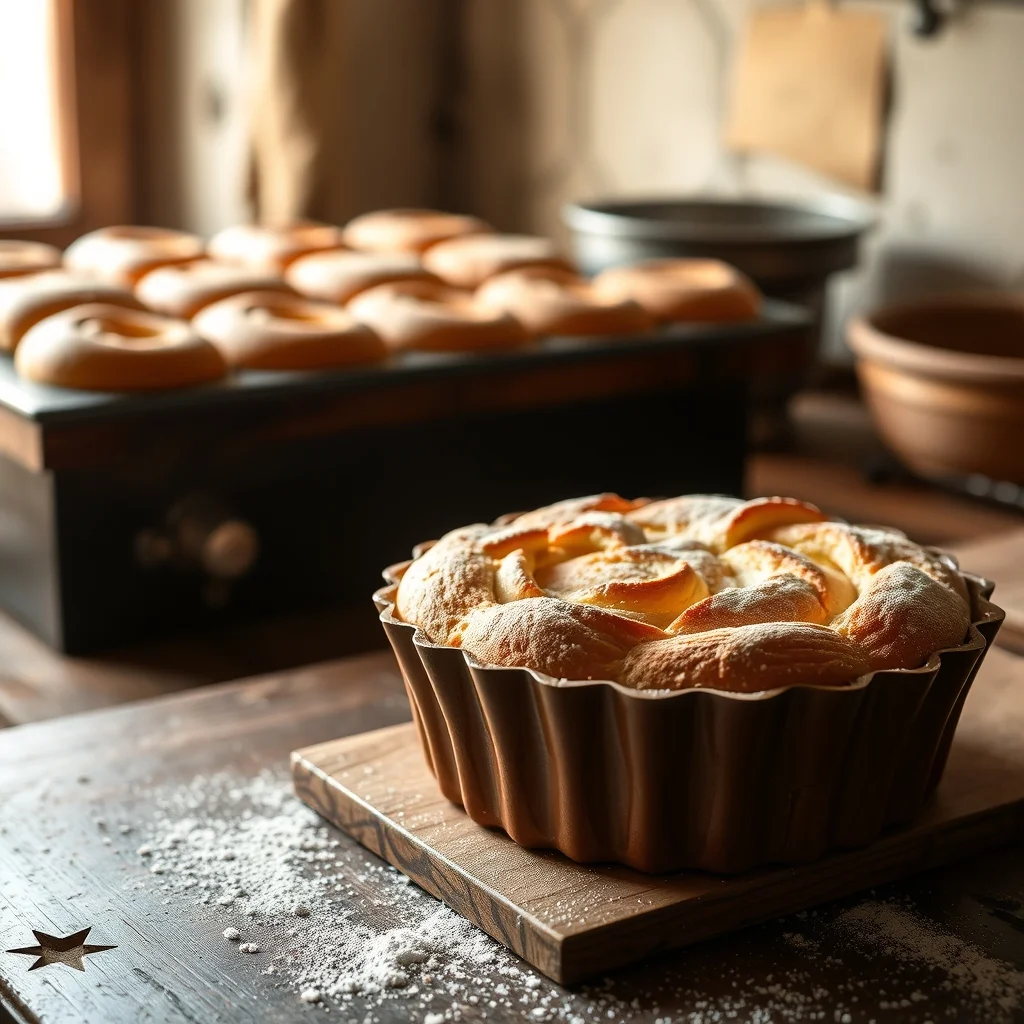
Classic Gugelhupf molds made from copper and earthenware were products of contemporary metalworking innovations. Their sturdy yet delicate fluted shape ensured even baking and distinctive aesthetics. The form was borrowed from religious cowls worn by monks symbolizing eternity and purity, which contributed to the cake’s popularity in royal circles as a status symbol.
When Marie Antoinette entered the French court in 1770, she introduced the Kouglof recipe carried from her native Vienna. This lighter, yeast-accented alternative to heavy French butter- and cream-laden pastries symbolized both her youthful indulgence and aristocratic refinement. Amid wars, scarcity, and strict milling laws, Kouglof bridged noble taste and dietary restrictions, thus becoming an iconic royal dessert.
2. Science: The Hidden Secrets Within Kouglof Dough
Kouglof is more than a cake. Within its dough live intricate molecules creating a remarkable texture. Yeast (Saccharomyces cerevisiae) metabolizes sugars, releasing carbon dioxide gas (CO₂), which forms bubbles that inflate the interconnected gluten network, producing Kouglof’s characteristic airy softness. Optimal proofing temperature lies between 30–40°C, with a slow fermentation of 1.5 to 2 hours to develop the perfect flavor and crumb.
Simultaneously, wheat proteins gliadin and glutenin absorb water, aligning to form an elastic gluten matrix. During baking, above 60°C, these proteins denature and coagulate, defining the bread’s structure. Fine flour combined harmoniously with water and emulsified butter chips yields gluten with ideal strength and extensibility, avoiding toughness or weakness.
The chemical marvel of Maillard browning unfolds above 140°C when reducing sugars react with amino acids to envelop the cake surface in golden-brown crust. The milk solids in butter enhance this browning and deepen flavor. This delicate nuance distinguishes Kouglof’s plush mouthfeel from variants made with margarine.
Lastly, maintaining dough hydration at 55–60% fosters adequate starch gelatinization and moisture retention, sustaining a moist crumb. Regional differences in water mineral content affect fermentation speed and gluten strength, necessitating recipe adjustments attuned to local water profiles.
3. Recipe: Six Steps to Bake Royal Kouglof at Home
Ingredients (for eight servings):
- High-gluten bread flour 500g (12–13% protein)
- Warm whole milk 250ml (about 40°C)
- Fresh compressed baker’s yeast 15g
- Granulated sugar 130g
- Unsalted butter 150g (cold, cubed)
- Large eggs 3 (room temperature)
- Fine salt 10g
- Rum-soaked raisins and almonds 80g (optional)
- Vanilla extract 5g (optional)
- Powdered sugar for dusting
- Activate Yeast: Dissolve yeast and 20g sugar in warm milk (~38–40°C) and wait 5–7 minutes until frothy. This kickstarts fermentation for rich flavor and consistent rise.
- Initial Mixing: In a large bowl, combine flour, remaining sugar, salt, eggs, and vanilla extract (if using) with the yeast milk. Mix gently with a spatula until dough just forms, avoiding overdevelopment of gluten at this stage.
- Butter Incorporation & Kneading: Gradually add cold butter pieces while kneading with dough hook or by hand for 12–15 minutes until the dough is smooth, glossy, and elastic but slightly tacky. The butter forms micro-layers that contribute to crumb richness.
- Bulk Fermentation: Place dough in an oiled bowl, cover with plastic wrap, and ferment at 25–28°C for 1.5–2 hours until doubled in size. Controlling temperature avoids over-fermentation and sourness.
- Add Fruit and Nuts: Gently deflate dough, fold in rum-soaked raisins and almonds evenly without damaging gluten structure, preserving tender crumb and texture.
- Shaping, Proofing & Baking: Butter a fluted Gugelhupf mold generously. Shape dough into a ring just smaller than the mold, place inside, cover, and proof 45–60 minutes until risen near the rim. Bake in a 175°C oven for 45–55 minutes until golden and internal temperature hits 90°C. Cool 15 minutes in mold before unmolding and dust with powdered sugar.
– The crust should be crisp yet tender, with a moist, soft interior where buttery aromas and subtle yeast notes harmonize — the hallmark of success.
4. Trend: The Expansion and Future of Kouglof Culture
Kouglof has evolved from aristocratic luxury to a modern cultural icon incorporating regional characteristics and health trends. Varying ingredients, techniques, and social contexts across Alsace, Austria, and France have yielded subtle differences in taste and form. Today’s consumers favor products blending tradition with local farm-sourced and eco-friendly ingredients, embracing fusion and clean-label concepts.
Particularly in Asia, including Korea, incorporation of local nuts, traditional fruits, and matcha powder gives rise to new Kouglof variants aiming to fulfill both health and cultural aspirations. The growing awareness of fermented breads’ health benefits, combined with balanced sugars and fats, feeds rising popularity.
| Aspect | Alsace / Germany | Austria / Central Europe | France (Paris / Versailles) |
|---|---|---|---|
| Primary Flour | Rye and refined wheat blends | High-quality rye and wheat mixes | Fine French wheats, guild-influenced |
| Leavening Technique | Natural yeast, slow rises | Sourdough or beer yeast blends | Commercial yeasts post 18th century |
| Fats Used | Butter, occasionally lard | Butter, suet, goose fat common | Primarily butter, refined dairy fats |
| Shape | Traditional tall fluted Gugelhupf molds | Tall fluted with symbolic cowl style | Elaborate royal decorations |
| Sweeteners & Add-ins | Honey, nuts, sugar, raisins | Walnuts, honey, assorted nuts | Increased colonial sugar, raisins |
| Social Context | Peasant festival food → bourgeois treat | Imperial holiday dessert | Court luxury and aristocratic symbol |