🍞 The White Privilege of Medieval Times: Rediscovering 'Manchet'
Historical Baking & Culture Guide
1. Symbol of Class: Bread Color and Social Status
While we often choose whole wheat bread for health today, in Medieval France, the color of bread was a direct indicator of 'Social Status'. White flour bread was not just food; it was a visual representation of power.
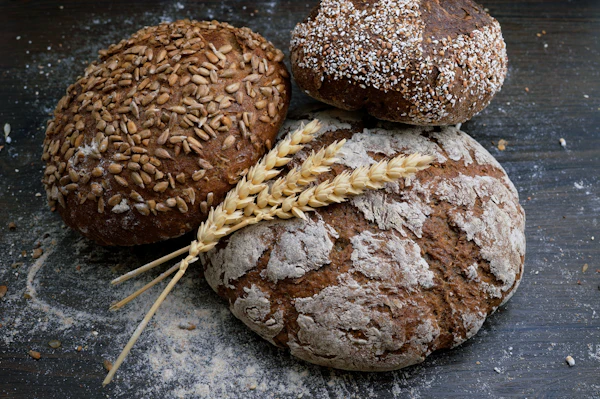
The common people subsisted on 'Meslin', a dark, coarse bread made from a mixture of wheat, rye, and barley. In contrast, the aristocracy monopolized 'Manchet', a fine white bread produced through multiple siftings (bolting). Social stratification was so strict that laws and religious customs often stigmatized the consumption of white bread by the lower classes as an inappropriate luxury.
2. The Art of Milling: Manchet and Nutrition
The medieval white bread, 'Manchet', was favored by nobles for its soft texture and digestibility. Wheat ground by millstones was sifted multiple times through silk or linen cloths to remove the bran and germ.
This process is remarkably similar to modern refining techniques. Flour devoid of fiber allows for better gluten formation, resulting in a light and airy rise during fermentation. This provided a stark contrast to the heavy, acidic whole grain breads of the time.
⚠️ Historical Irony: The Nutritional Paradox
The white bread preferred by the nobility was actually nutritionally inferior to the peasant's whole grain bread. By discarding the bran, they lost essential B vitamins and dietary fiber. This was one of the reasons the wealthy often suffered from nutritional deficiencies like beriberi.
Medieval Bread Comparison
| Category | Manchet (White) | Meslin (Dark) |
|---|---|---|
| Consumers | Nobility, Aristocrats | Peasants, Commoners |
| Ingredients | Refined White Flour | Wheat, Rye, Barley Mix |
| Texture | Light, Soft | Heavy, Coarse |
| Modern Value | Origin of Brioche | Health Food, Sourdough |
3. 2026 Trends: The Return of Heritage Grains
Looking ahead to 2026, the bakery market is showing an interesting reversal. Coarse grain breads, once a symbol of poverty, have now emerged as icons of 'Sustainability' and 'Health'.
Artisan bakeries in France and across Europe are utilizing ancient grains (Spelt, Emmer) and combining them with medieval natural fermentation methods (Levain) to create modern premium breads. Simultaneously, there is a spotlight on 'Neo-Classic White Bread' projects that restore the Manchet of noble tables while fortifying it with lost nutrients.
💡 Baker's Insight
- Understanding Ingredients: While modern white bread uses bleached flour, authentic traditional methods result in a creamy white color.
- Slow Baking: Using natural leaven instead of commercial yeast breaks down gluten, making even white bread easier to digest.
