🦠 Microscopic Alchemy: The Life Force of Yeast in Bread
The Science of Yeast & Fermentation Trends
1. Historical Evolution: From Accidental Discovery to Pasteur
The first bread humanity encountered was hard, unleavened flatbread. About 6,000 years ago in Ancient Egypt, wild yeast spores from the air accidentally landed on neglected dough. In the warmth of the Nile Valley, the dough swelled, and when baked, humanity experienced a fluffy texture and rich flavor for the first time. This was the beginning of 'Sourdough' and the Big Bang of baking history.
For millennia, fermentation was considered 'divine magic' until the mid-19th century when Louis Pasteur unveiled its secrets. Pasteur proved that fermentation was not a mere chemical reaction but the biological activity of living microorganisms (yeast). This discovery transitioned baking from a craft based on experience to a science of controlling and cultivating microbes. While the development of commercial yeast (Saccharomyces cerevisiae) with uniform fermentation power ushered in the era of mass production, there is recently a strong movement returning to wild fermentation to reclaim ancient flavors.
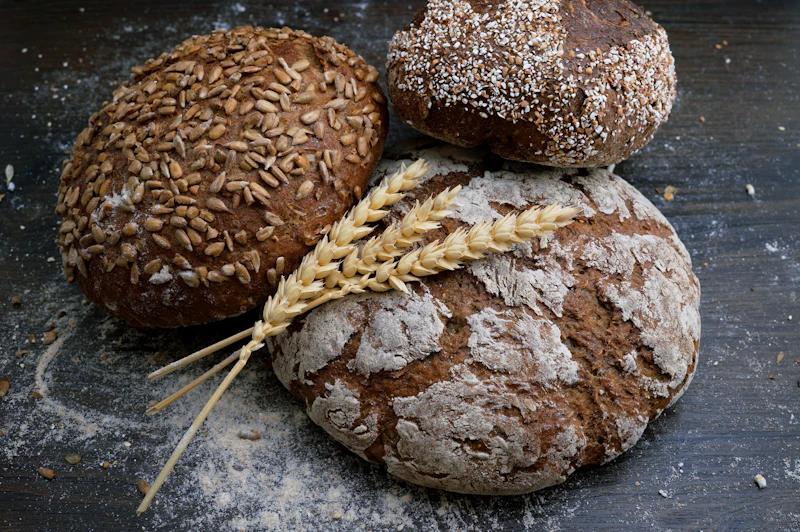
2. Mechanism of Fermentation: Turning Bread into Nutrition
Yeast consumes sugar in the dough and expels Carbon Dioxide (CO2), Ethanol, and various organic acids. The CO2 gets trapped in the gluten network, causing the bread to rise, while the alcohol and organic acids create unique flavors and aromas during the baking process.
Nutritionally, fermentation acts as a 'Detox' process. Whole grains contain 'Phytic Acid,' which inhibits mineral absorption. During long fermentation, enzymes produced by yeast and lactobacilli break down this phytic acid. Consequently, eating fermented bread significantly increases the body's absorption rate of iron, zinc, and magnesium. Furthermore, the organic acids produced during fermentation lower the bread's pH, improving preservation and helping to moderate blood sugar spikes.
⚠️ Wild Fermentation vs. Commercial Yeast
Commercial yeast is a single strain optimized for 'Gas Production (Rising)'. In contrast, natural starters (Levain) are complex ecosystems where wild yeast and lactic acid bacteria coexist. Bread made with Levain has a sour tang, deep umami, and better digestibility because the lactobacilli pre-digest the gluten.
3. Signature Recipe: Home-Cultivated 'Raisin Yeast' Bread
This method uses no commercial yeast, relying solely on raisins, water, and time to cultivate wild yeast. You will experience the fragrance of natural fruit and a depth of flavor impossible to find in store-bought bread.
🧪 Phase 1: Waking the Yeast (Raisin Water)
- Ingredients: Sterilized glass jar, 100g Non-coated Raisins, 300ml Lukewarm water, 1 tsp Sugar.
- Method: Combine ingredients in the jar, seal, and place in a warm spot (25~28°C). Open the lid once a day to let in air and shake gently. After 4-5 days, if all raisins float and bubbles fizz like soda, your 'Yeast Water' is ready.
🍞 Phase 2: Baking Wild Yeast Bread (Campagne Style)
- Ingredients: 300g Bread Flour, 100g Whole Wheat Flour, 150ml Raisin Yeast Water, 130ml Water, 8g Salt.
- Autolyse: Mix flours, yeast water, and water just until no dry flour remains. Let sit for 30 mins (give enzymes time to work).
- Knead & Rise: Add salt and knead until smooth. Let rise at room temp for 3-4 hours (takes longer than instant yeast).
- Shape: Round the dough and place in a floured banneton basket. Second rise for 2 hours.
- Bake: Bake in a preheated oven at 230°C (450°F) for 25-30 minutes (a Dutch oven works best).
* Flavor Tip: This bread tastes best a day after baking. The moisture redistributes, creating a nutty crust and chewy crumb.
4. 2026 Trends: Protein Power & Microbiome
The keyword defining the 2026 bakery market is 'Functional Evolution'. While past wellness trends focused on 'subtraction' (Low-Carb, Gluten-Free), the bread of the future focuses on 'addition'.
| Trend Keyword | Description & Features |
|---|---|
| Protein Power | Beyond simple whey additions, doughs utilizing high-protein plant ingredients like chickpeas and lentils are becoming mainstream, maximizing nutritional density as a meal replacement. |
| Microbiome | 'Post-biotic' breads that improve the gut environment. Tailored yeast breads fermented with specific lactobacilli strains optimized for gut health are emerging. |
| Up-cycling | Eco-friendly fermentation technologies are spreading, milling discarded ingredients like spent grain from beer brewing or fruit peels into new bread ingredients. |